By Damian Nowak
Which Galician architect do we encounter most often in the field today? Usually one thinks of Talowski, Sas-Zubrzycki, Kamienobrodzki, Kuhn, Zachariewicz, Obmiński, Skowron, Łuszczkiewicz, Odrzywolski, or Zawiejski. These are names that resonate well in architectural history. And yet, it was not their designs that were the most widely realized…
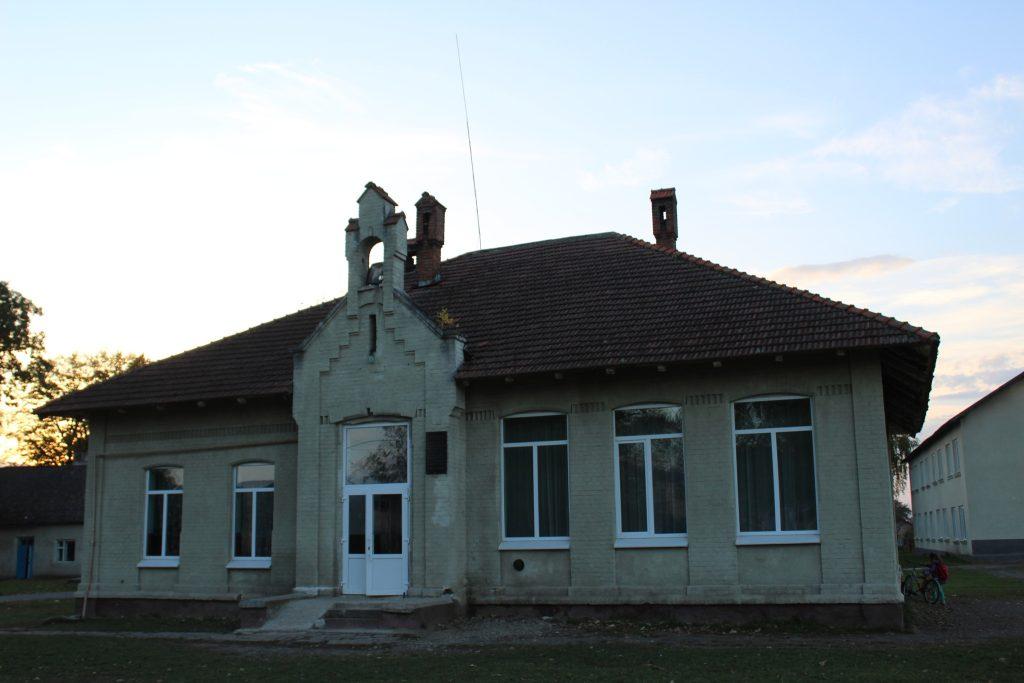
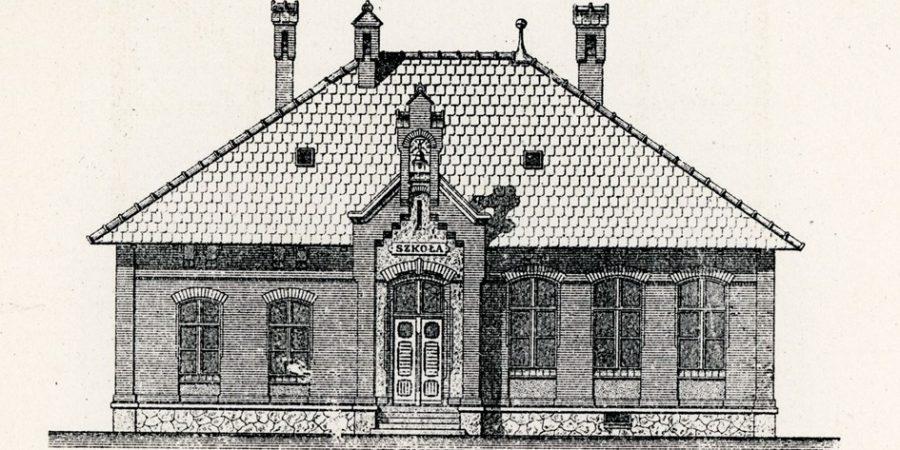
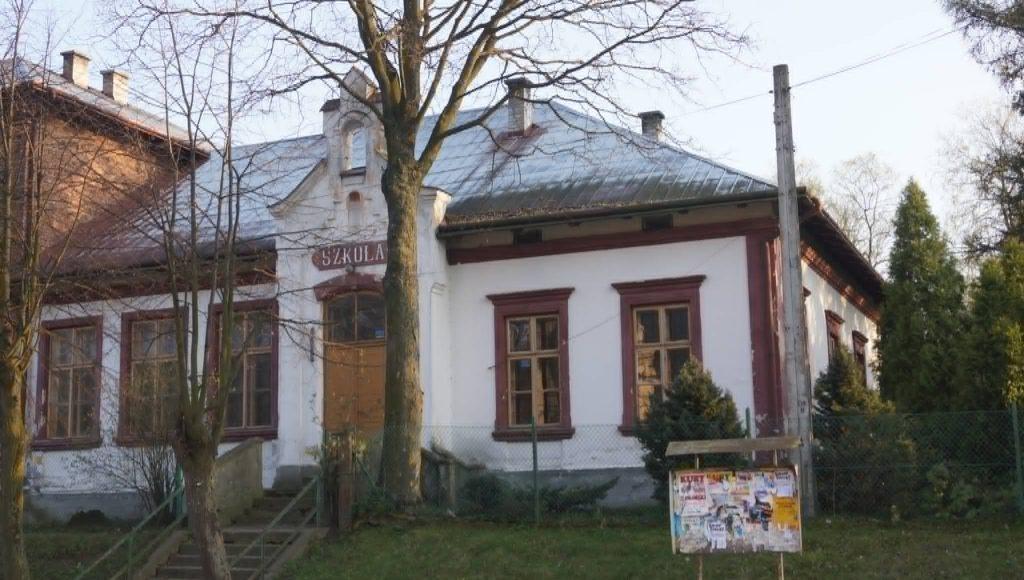
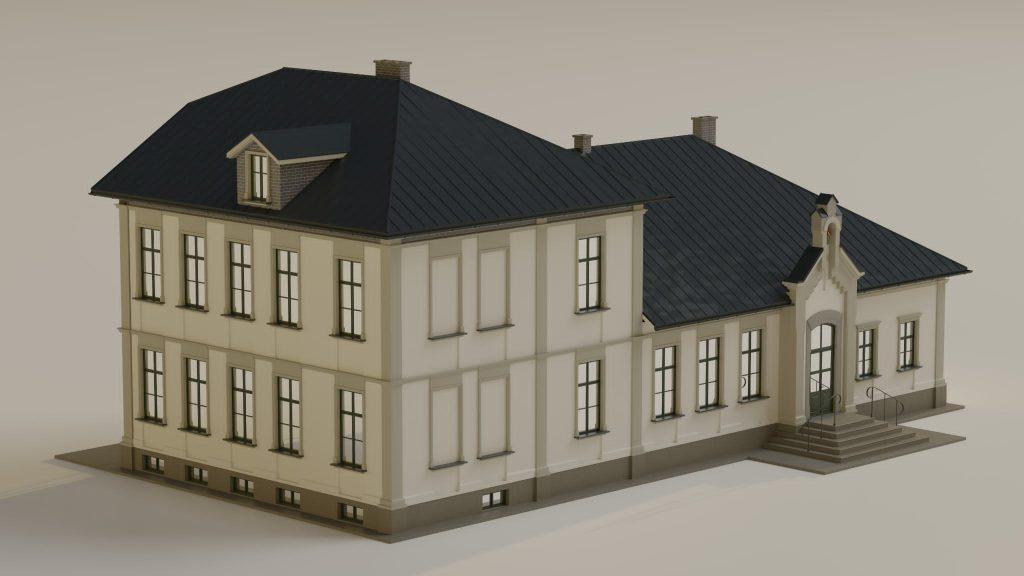
Instead, the most frequently built structures turned out to be the modest school buildings designed by Tadeusz Münnich. He created a series of model designs for one-, two-, three-, and four-class schools, which quickly spread throughout the Galician countryside and were erected in hundreds of localities. Many of these buildings still stand today, though they rarely attract attention.
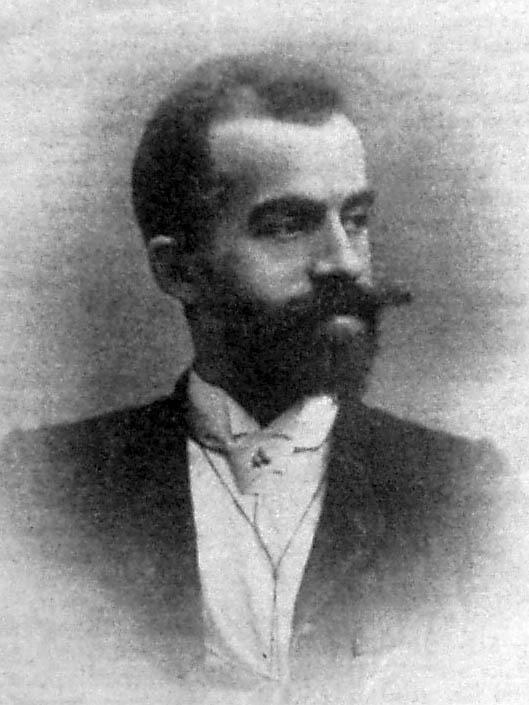
So who was Münnich—the author of designs that, for a certain period, reached the countryside more often than the works of the most renowned Galician architects?
Tadeusz Wacław Münnich was born on July 26, 1861, in Kraków. After completing a technical secondary school in his hometown, he began studying architecture at the Higher Technical School in Vienna. In 1885, he also graduated from the Lviv Polytechnic. He began his career at the architectural and construction firm of Ivan Levynskyi in Lviv—one of the largest and most highly regarded architectural offices in Galicia. In 1888, he also began an academic career: between 1888 and 1891 as an assistant in the Department of Construction at the Higher Industrial School in Kraków, and later (1891–1894) as an assistant in the Faculty of Architecture at the Lviv Polytechnic. At the same time, he lectured at the Industrial School in Lviv. In 1894, he received the title of professor. He died tragically on July 5, 1900, and was buried in the Lychakiv Cemetery.
Münnich was actively involved in the development of architecture in Galicia. Between 1887 and 1900 he was a member of the Polytechnic Society in Lviv, and from 1898 served on its board as well as editor of its journal, Czasopismo Techniczne. In addition to his design work, he oversaw numerous construction projects in Lviv—including the reconstruction of the Church of St. John the Baptist and the renovation of the Breuer Palace. His most interesting field of activity, however, was public architecture—above all, school buildings.
At the beginning of the 1890s he was appointed technical adviser to the National School Council, responsible for coordinating the design of public buildings, specifically schools. This period coincided with an increase in construction activity. Until then, school buildings—particularly those constructed far from administrative centers—often failed to meet building code requirements and sanitary guidelines established by the Ministry of Education (in 1873 and 1875). This situation stemmed from the conditions in which Galician education operated. Responsibility for school construction lay solely with individual municipalities, which, lacking support from central institutions (in the form of direct subsidies or long-term, low-interest loans), either avoided undertaking such investments or implemented them only partially.
The situation changed in 1894, when the so-called Loan Fund for School Construction was established by law—a national fund providing municipalities with interest-free loans (the interest was paid from the budget of the National School Council). The creation of the fund naturally encouraged many municipalities to begin building projects, but the most important aspect was that the Council was now granted control over project selection and construction oversight, which from that point onward was to follow established procedures. The Council commissioned its technical adviser, Tadeusz Münnich, to prepare a set of model architectural designs for various types of schools: one-class, two-class, three-class, four-class, five-class, and examples of urban district schools.
Münnich’s school designs were provided to municipalities free of charge. Since they met all parameters required at the time, they did not require consultation or approval by the Council (which was necessary when using any other, even specially commissioned, design). Both the recommended designs and all others were intended to be supervised by technical inspectors appointed by the Council.
Wishing to expand his expertise in school architecture, in August 1899 Münnich traveled on a study tour to Western Europe. As reported by the Lviv daily Gazeta Narodowa:
“On Saturday Mr. Tadeusz Wacław Münnich, architect and professor of the Lviv State Industrial School, departed from Lviv on a study trip to Switzerland, Bavaria, Bohemia, and Germany. Professor Münnich, as technical adviser to the National School Council, will visit folk schools and vocational technical schools in order to apply his observations in our country. The collected instructional materials, sketches, and photographs will undoubtedly serve future publications on the construction of school buildings and their internal arrangements.”
***
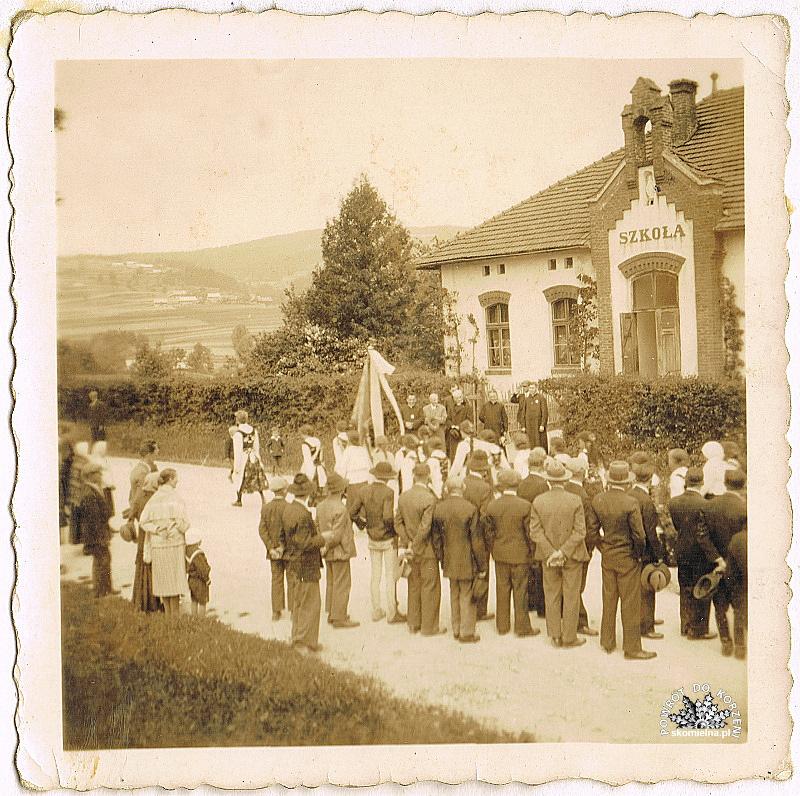
Today, Münnich’s schools can still be found throughout Galicia, on both sides of the Polish–Ukrainian border. Some have been altered so extensively that their original design is barely recognizable, while others remain largely unchanged, preserving much of their appearance from more than 120 years ago.
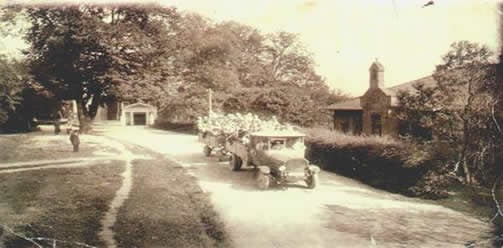
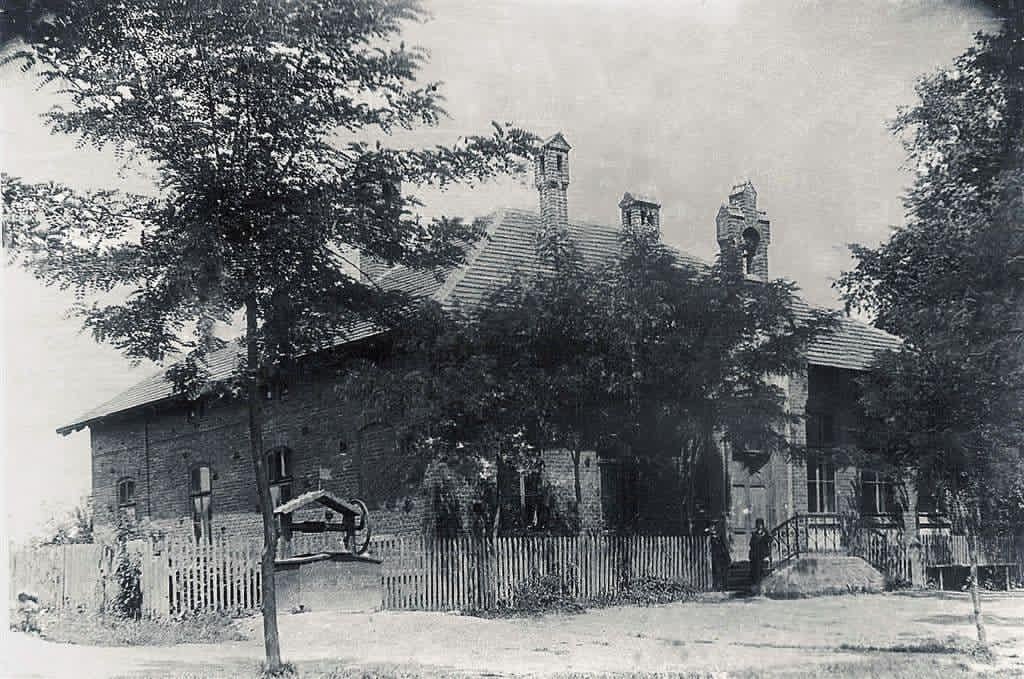
Boryslav-Volianka, Ukraine (Borysław-Wolanka)
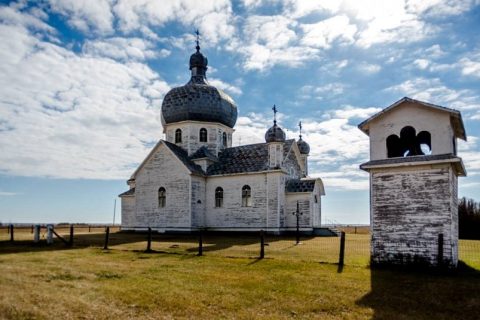
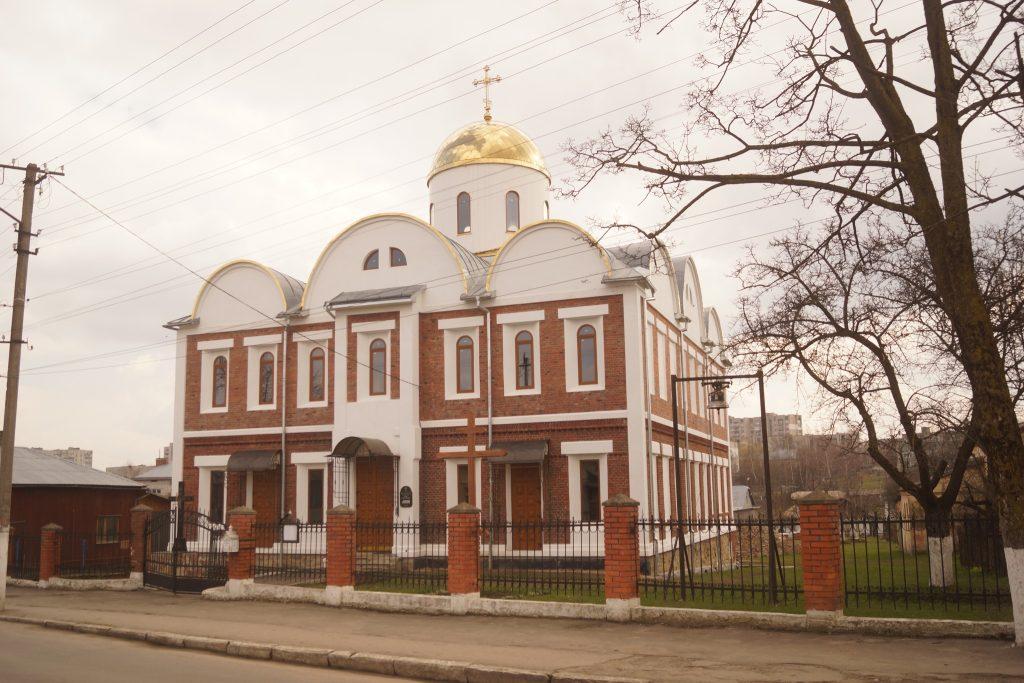
The former school in Boryslav-Volianka. After a recent renovation the building now serves as an Orthodox church.

Binarowa near Biecz, Poland
Rakiv, Ukraine
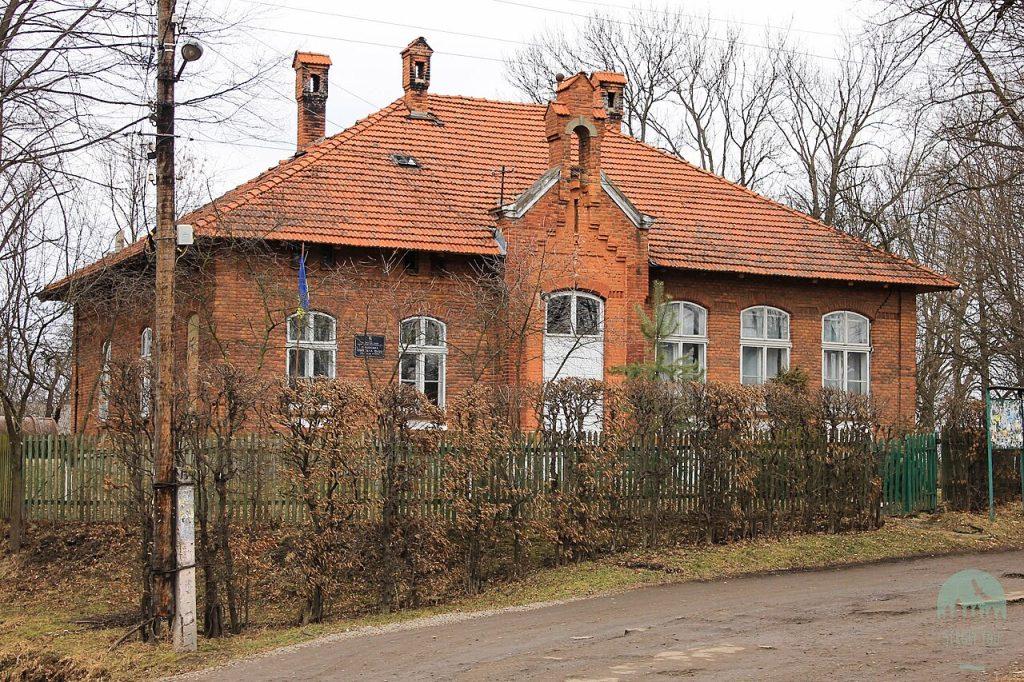
Derniv, Ukraine
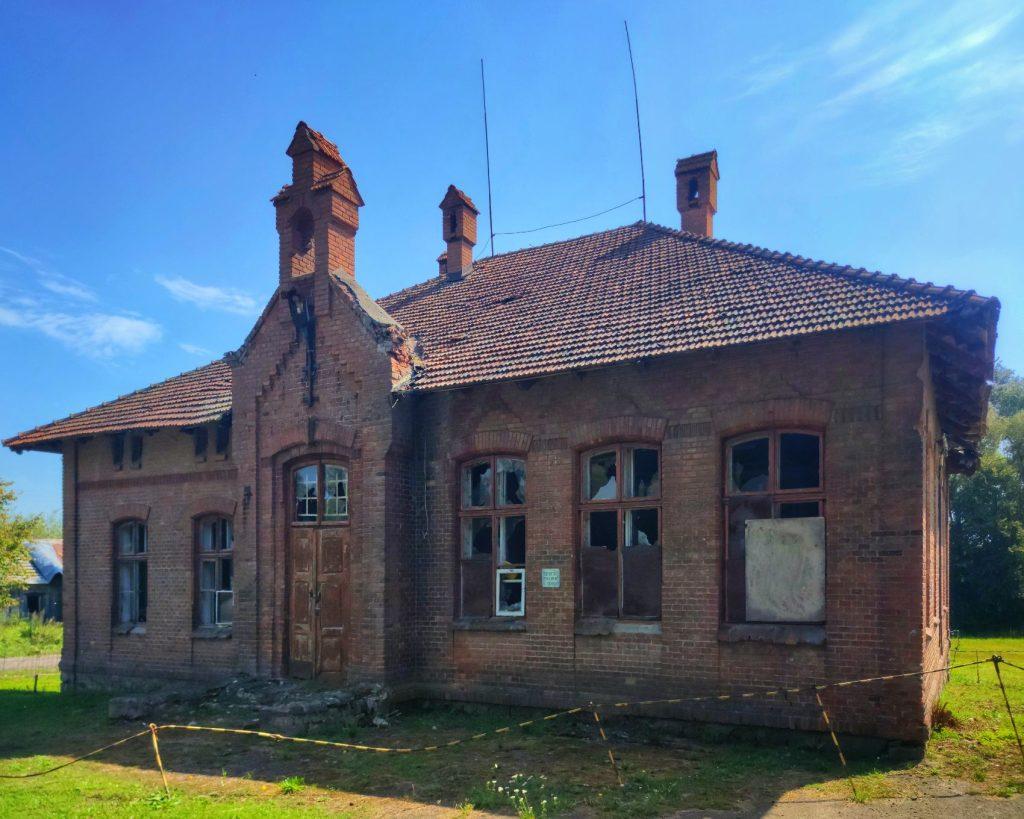
Hnizdychiv, Ukraine